
Dhoopam is a traditional Ayurvedic practice involving the use of smoke produced from selected substances, often herbs or other traditional preparations. Known as a form of herbal fumigation, it has been used in certain Ayurvedic settings as part of individualized care. Its traditional applications may vary according to the preparation, purpose, and practitioner’s assessment.
At Ayurveda 360 in Mumbai, Dhoopam is presented as a traditional therapeutic procedure that may be considered for selected cases, including certain non-healing wounds. The approach emphasizes careful administration and an individualized assessment rather than applying the same procedure to every person.
Understanding what Dhoopam involves, how it is traditionally used, and where professional medical care remains essential can help readers make informed decisions about their health.
What Is Dhoopam in Ayurveda?
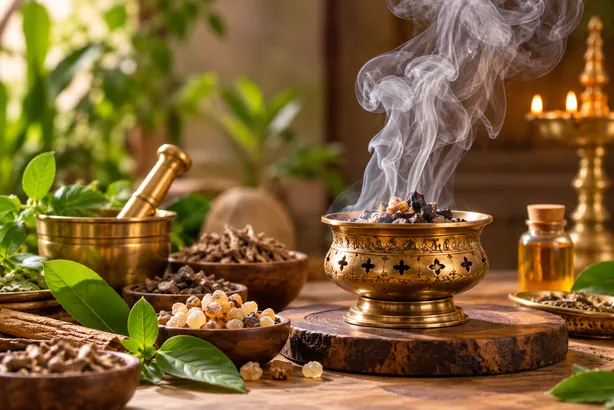
In traditional Ayurveda, the word Dhoopam is associated with fumigation using smoke generated from selected materials. Depending on the traditional preparation and intended purpose, the procedure may involve carefully prepared herbal substances placed in a suitable vessel to produce smoke.
The practice is rooted in traditional Ayurvedic approaches to care. However, the ingredients, methods, and intended applications can differ between practitioners and treatment settings. Dhoopam should not be understood as one standardized procedure with identical ingredients or effects in every case.
In clinical settings, its use requires appropriate preparation, attention to safety, and professional judgment. It is not a home remedy that should be attempted without qualified guidance.
How Is Dhoopam Traditionally Used?
Dhoopam may be incorporated into selected Ayurvedic treatment plans according to the individual’s condition and the practitioner’s assessment.
The process shown by Ayurveda 360 illustrates several important elements of the procedure:
Why Is Obesity a Health Concern?
1. Individual Assessment
The practitioner considers the person’s condition before deciding whether a traditional treatment is appropriate. A wound that is not healing needs careful assessment because its cause may involve infection, poor circulation, diabetes, pressure, or other underlying health problems.
Not every wound is suitable for the same treatment, and Dhoopam should not be assumed to be appropriate for every patient.
2. Preparation of Traditional Materials
The video depicts a carefully prepared herbal fumigation setup, with selected material heated in a suitable vessel. The preparation and handling of materials are important parts of the procedure.
The exact ingredients and formulation are not established by the video alone. Therefore, it would be inappropriate to assume that every Dhoopam treatment uses the same herbs or preparation.
3. Careful Administration
The video shows a practitioner administering the procedure near an affected area of the foot. This illustrates the clinic’s emphasis on controlled administration rather than an unsupervised home application.
The appropriate method, distance, duration, and suitability of any procedure must be determined by a qualified professional. Smoke and heat can cause burns, irritation, or respiratory problems if handled incorrectly.
4. Individualized Follow-Up
Every wound and every person may need a different approach. This is an important principle in responsible wound care. A practitioner should monitor the affected area and review whether the overall care plan remains appropriate. Traditional therapies should not delay necessary diagnosis, wound cleaning, infection management, or other evidence-based treatment.
Why Is Dhoopam Considered in Traditional Wound Care?
Certain traditional Ayurvedic practices use herbal fumigation as part of selected treatment approaches. In Ayurveda 360’s presentation, Dhoopam is associated with individualized care for certain non-healing wounds.
However, traditional use does not automatically establish clinical effectiveness. Evidence supporting Dhoopam for wound healing may be limited, and its benefits and risks depend on the preparation, method of application, and clinical circumstances.
Non-healing wounds can have complex causes. For example, a foot wound may be associated with diabetes, reduced blood flow, repeated pressure, nerve damage, or infection. Addressing these underlying factors is essential to appropriate care.
Dhoopam should therefore not be presented as a guaranteed solution, a proven cure for chronic wounds, or a replacement for conventional wound management. Anyone considering it should discuss the proposed treatment with a qualified healthcare professional.
What Precautions Should You Take Before Dhoopam Therapy?
Safety is especially important when a procedure involves smoke, heat, or an open wound.
Before considering Dhoopam, keep the following points in mind:
- Seek a proper assessment – A persistent wound should be evaluated by a qualified doctor to identify its cause and determine appropriate treatment.
- Avoid self-treatment – Do not burn herbs or apply smoke directly to a wound at home.
- Discuss existing conditions – Diabetes, circulation problems, reduced sensation, allergies, and other health concerns may affect wound care decisions.
- Understand the proposed procedure – Ask about the materials used, the intended purpose, potential risks, and available alternatives.
- Continue prescribed care – Do not stop prescribed medication, dressings, antibiotics, or other recommended treatment without consulting your treating clinician.
Seek prompt medical attention if a wound becomes increasingly painful, red, hot, swollen, or produces pus. Fever, spreading redness, blackened tissue, or a rapidly worsening wound may require urgent assessment.
How Does Ayurveda 360 Approach Dhoopam Therapy?
Ayurveda 360, based in Mumbai, presents Dhoopam as a traditional Ayurvedic procedure used in selected cases as part of personalized care. The clinic’s communication emphasizes careful administration and the understanding that individual health concerns may require different approaches.
Anyone interested in Ayurvedic wound care should first discuss their medical history, current treatment, and the condition of the wound with qualified healthcare professionals. A responsible treatment plan should account for the cause and severity of the wound, potential risks, and the need for conventional medical care.
If you are exploring traditional Ayurvedic therapies, book a consultation with Ayurveda 360 to discuss your individual health concerns and suitable care options. A consultation can help you understand the proposed approach and whether it is appropriate for your circumstances.
Conclusion
Dhoopam is a traditional Ayurvedic fumigation practice involving smoke produced from selected materials. As shown in Ayurveda 360’s presentation, it may be considered as part of individualized care for certain non-healing wounds.
Nevertheless, traditional use should be distinguished from established clinical evidence. Wounds that persist or worsen require professional medical evaluation, and appropriate wound care must not be delayed in favour of an unproven therapy.
Understanding the procedure, discussing its risks and limitations, and making informed decisions with qualified healthcare professionals are essential steps towards responsible, patient-centred care.