
PMOS (Polyendocrine Metabolic Ovarian Syndrome) is the updated name for the condition previously known as Polycystic Ovary Syndrome (PCOS). The terminology change was announced on 12 May 2026 following an international consensus process published in The Lancet.
The updated name reflects the endocrine, metabolic and ovarian features of the condition. Ovarian cysts are not necessary for diagnosis. A three-year transition period has been planned, with both PMOS and PCOS terminology appearing during this period and full implementation targeted for the 2028 international guideline update.
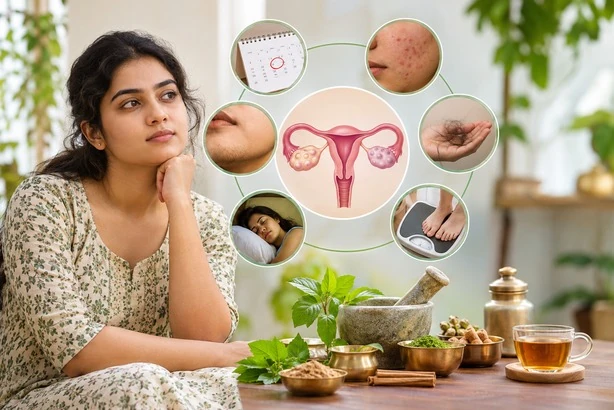
PMOS can affect menstrual health, hormonal balance, metabolism and reproductive function. Symptoms vary between individuals.
Common Signs and Symptoms of PMOS
- Irregular menstrual cycles
- Acne and oily skin
- Excess facial hair
- Hair fall and thinning
- Some individuals experience weight gain
- Difficulty conceiving
- Fatigue and mood changes
- Dark skin patches
- Sleep disturbances
Not everyone experiences the same symptoms. Medical evaluation helps identify individual health concerns.
Ayurvedic Understanding of PMOS
From an Ayurvedic perspective, PMOS may be assessed through Rasa Dhatu Dushti, Rakta Dhatu Dushti, Mamsa Dhatu Dushti, Meda Dhatu Dushti and Artavavaha Srotas, along with Agni and lifestyle factors.
Dhatu refers to body tissues, Dushti indicates imbalance, Srotas refers to bodily channels, and Agni relates to digestive and metabolic functions. Dosha refers to Vata, Pitta and Kapha.
The following factors represent traditional Ayurvedic considerations, not scientifically established causes of PMOS.
1. Rasa Dhatu Dushti
Mental factors: Stress, anxiety and inadequate sleep.
Dietary factors:
- Eating without hunger or at irregular times.
- Improper food quantity and stale food.
- Excessive heavy, cold, oily or greasy foods.
- Incompatible food combinations and overeating.
2. Rakta Dhatu Dushti
Dietary factors:
- Excessively sour, salty and pungent foods.
- Fermented and acidic foods.
- Excessive alcohol consumption.
- Specific roots, vegetables and meat mentioned in traditional Ayurvedic dietary considerations.
Lifestyle factors: Prolonged heat exposure, frequent anger, emotional stress, agitation and suppression of natural urges.
3. Mamsa Dhatu Dushti
Dietary factors:
- Excessive heavy meat consumption, particularly poorly prepared meat.
- Food cooked more than 24 hours earlier.
- Highly processed and fast foods.
- Rotten or improperly stored food.
Lifestyle factors: Excessive physical labour, strenuous exercise beyond one’s capacity and direct physical trauma.
4. Meda Dhatu Dushti (Fat Tissue)
Traditional Ayurvedic considerations include:
- Deep-fried foods, excessive oils and hydrogenated fats.
- Refined sugars, sweets and excessive simple carbohydrates.
- High-fat dairy and fatty red meat.
- Excessive alcohol consumption.
- Lack of physical activity and a sedentary lifestyle.
- Sleeping during the daytime.
5. Artava and Artavavaha Srotas (Reproductive Health)
Dietary factors: Dry, stale or light foods, excessive chilli, junk food and ultra-processed foods.
Lifestyle factors: Inadequate rest during menstruation, daytime sleeping, excessive physical exertion, strenuous travelling and excessive sexual activity.
These are traditional Ayurvedic perspectives and should not be interpreted as established medical causes or a diagnosis.
Ayurvedic Treatment and Management of PMOS
Ayurvedic management focuses on individual assessment and addressing the factors identified in each patient’s condition.
- Ahara (Diet) – Dietary modifications based on Agni, digestion, Dosha and Meda Dhatu.
- Vihara (Lifestyle) – Regular physical activity, adequate sleep and stress management.
- Agni Management – Addressing digestive and metabolic disturbances identified during assessment.
- Dosha and Dhatu Management – Individualised care based on the assessment of Dosha and Dhatus.
- Artava Management – Addressing menstrual and reproductive concerns through appropriate individualised care.
- Panchakarma and Ayurvedic Medicines – Considered only when clinically appropriate following assessment by a qualified practitioner.
Evidence supporting specific Ayurvedic treatments for PMOS remains limited. Their safety and effectiveness should be evaluated carefully.
Medical evaluation of hormonal and metabolic health is also important. Ayurvedic treatment should complement, not replace, necessary medical care.
Frequently Asked Questions
1. Is PMOS the same as PCOS?
Yes, PMOS is the updated name for the condition previously known as PCOS.
2. Can PMOS occur without ovarian cysts?
Yes, Ovarian cysts are not required for diagnosis.
3. What are the common symptoms of PMOS?
Irregular periods, acne, excess facial hair, hair thinning and reproductive difficulties are common features.
4. Does PMOS affect metabolic health?
Yes, It is associated with insulin resistance and increased metabolic health risks.
5. Which foods does Ayurveda consider in PMOS?
Traditional considerations include fried foods, excessive oils, refined sugars, stale food and ultra-processed foods.
6. Can Ayurveda replace medical treatment for PMOS?
No, Ayurvedic care should complement necessary medical evaluation and treatment.
7. Does everyone with PMOS need Panchakarma?
No, It should only be considered following individual assessment by a qualified practitioner.
Treat the Whole Picture, Not Just the Cycle
PMOS requires an individualised approach that considers menstrual health, hormonal disturbances, metabolism, digestion and lifestyle.
An Ayurvedic assessment explores Dosha, Agni, Rasa Dhatu, Rakta Dhatu, Mamsa Dhatu, Meda Dhatu and Artavavaha Srotas to guide personalised dietary, lifestyle and treatment recommendations.
At Ayurveda 360, the emphasis is on understanding each patient’s presentation and planning appropriate care.
Get a Personalised Ayurvedic Assessment for PMOS
Every case of PMOS looks different. Share your symptoms, daily routine and medical reports, and our team will plan individualised care around you.
[Book Your Consultation] · [Chat on WhatsApp] · [Call: +919960077614]
Ayurvedic care works best alongside your doctor’s guidance and should not replace necessary medical evaluation.
Disclaimer: This content is for educational purposes only and does not replace professional medical advice, diagnosis or treatment. Please consult a qualified doctor before starting any new treatment.